
Introduction
The demand for DevOps professionals has grown rapidly across the global IT industry. As businesses continue adopting cloud computing, automation, Kubernetes, and modern infrastructure practices, DevOps has become one of the highest-paying and fastest-growing technology careers. Companies today need professionals who can automate deployments, improve scalability, manage cloud infrastructure, and deliver software faster with greater reliability.Best DevOps Salary Guide
DevOps salaries continue increasing because organizations are heavily investing in digital transformation, cloud-native infrastructure, automation pipelines, and platform engineering. Modern businesses require faster software delivery, reduced downtime, better security, and scalable cloud environments. This has created massive demand for skilled DevOps engineers, SRE professionals, Kubernetes experts, cloud architects, and DevSecOps engineers.
One of the biggest reasons behind strong DevOps salary growth is the shortage of highly skilled professionals. Many companies struggle to find engineers with practical experience in Linux, Kubernetes, CI/CD pipelines, Terraform, cloud platforms, automation scripting, monitoring, and security automation. As a result, professionals with strong hands-on expertise often receive excellent salary packages and career opportunities.
This guide helps freshers, developers, cloud engineers, system administrators, and IT professionals understand DevOps salary trends, career growth opportunities, high-paying specializations, certifications, required skills, and practical career roadmaps for long-term success.
Why DevOps Salaries Are High
Rapid Cloud Adoption
Organizations worldwide are migrating applications and infrastructure to cloud platforms. This migration requires DevOps engineers who can manage automation, scalability, infrastructure provisioning, monitoring, and deployment pipelines.
High Demand for Automation
Modern software delivery depends heavily on automation. Companies need professionals who can automate infrastructure, CI/CD pipelines, testing, deployment, and monitoring processes to improve efficiency and reduce manual errors.
Kubernetes and Containerization Growth
Containerization and Kubernetes adoption have transformed modern infrastructure management. Skilled Kubernetes engineers and platform engineers are highly valued because they help organizations scale applications efficiently.
CI/CD Adoption Across Industries
Continuous Integration and Continuous Deployment practices are now standard in software engineering. Organizations require DevOps professionals who can build reliable CI/CD pipelines and automate software delivery.
Rising DevSecOps Demand
Security is becoming a critical part of software delivery pipelines. DevSecOps professionals who understand security automation, compliance, vulnerability scanning, and secure infrastructure management often receive higher salary opportunities.
Multi-Cloud Infrastructure Expansion
Companies increasingly use multiple cloud providers for flexibility and scalability. Professionals with AWS, Azure, and Google Cloud knowledge are in strong demand across global markets.
Shortage of Skilled Professionals
The biggest factor behind high DevOps salaries is the talent gap. Many organizations struggle to find engineers with real-world project experience in automation, cloud architecture, Kubernetes, and infrastructure management.
Who Should Read This Guide
This guide is ideal for:
- Freshers entering DevOps careers
- Software developers moving into DevOps
- Linux administrators transitioning to cloud engineering
- Cloud engineers improving automation skills
- Automation engineers expanding into infrastructure management
- SRE engineers building reliability expertise
- Platform engineers working on scalable infrastructure
- DevSecOps professionals focusing on secure pipelines
- IT professionals planning career transitions
DevOps Salary Overview
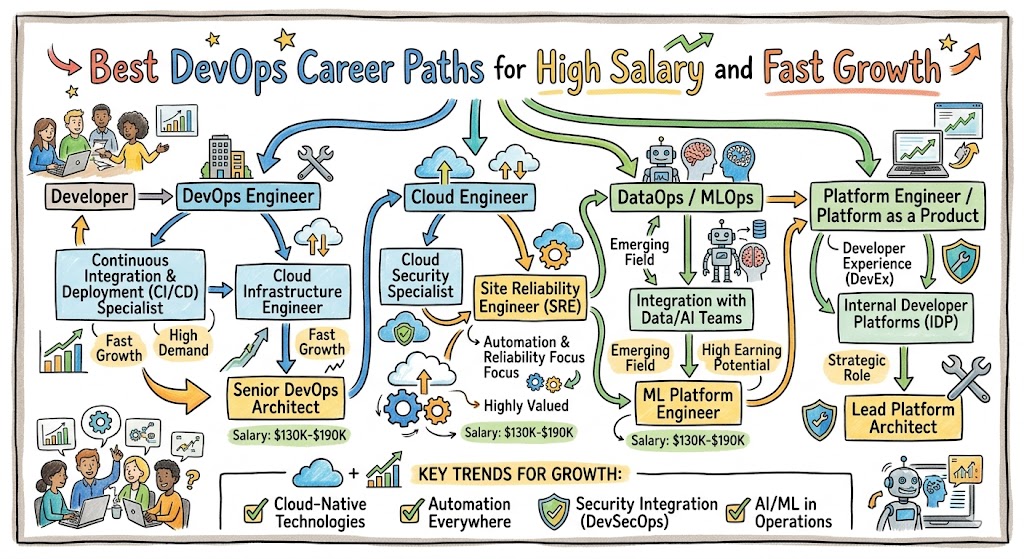
DevOps remains one of the most rewarding careers in modern IT because it combines cloud computing, automation, infrastructure engineering, software delivery, and platform operations. Salary growth in DevOps is often faster than many traditional IT roles because companies depend heavily on reliable infrastructure and continuous deployment practices.
Entry-level professionals typically begin with Linux, scripting, Git, cloud fundamentals, and CI/CD basics. As experience grows, professionals gain expertise in Kubernetes, Terraform, monitoring, observability, cloud architecture, and automation platforms, which significantly increases salary potential.
Mid-level engineers usually handle infrastructure automation, deployment pipelines, Kubernetes management, cloud optimization, and monitoring systems. Senior engineers and architects often lead platform engineering initiatives, multi-cloud infrastructure strategies, DevSecOps implementations, and large-scale automation programs.
Global demand for DevOps professionals continues to rise because cloud-native infrastructure and automation are now essential for modern software development.
DevOps Salary by Experience Level
| Experience Level | Typical Roles | Skills Expected | Salary Growth Potential | Career Scope |
|---|---|---|---|---|
| Fresher | DevOps Trainee, Junior Engineer | Linux, Git, Networking Basics | Moderate | Strong learning opportunities |
| Junior DevOps Engineer | CI/CD Engineer, Automation Engineer | Docker, Jenkins, Shell Scripting | High | Rapid career growth |
| Mid-Level DevOps Engineer | Cloud DevOps Engineer, Kubernetes Engineer | Terraform, Kubernetes, AWS/Azure | Very High | Leadership opportunities |
| Senior DevOps Engineer | Senior DevOps Engineer, SRE | Platform Automation, Monitoring, Security | Excellent | Architecture and strategy roles |
| Lead Engineer | DevOps Lead, Infrastructure Lead | Multi-cloud, Team Management | Extremely High | Enterprise-level responsibilities |
| Architect / Platform Engineer | Cloud Architect, Platform Engineer | Kubernetes, DevSecOps, Platform Engineering | Premium | Top-tier career growth |
Highest Paying DevOps Roles
| Role | Main Skills | Difficulty Level | Salary Potential | Career Demand |
| DevOps Engineer | CI/CD, Linux, Automation | Medium | High | Very Strong |
| Cloud DevOps Engineer | AWS, Azure, Terraform | High | Very High | Growing Rapidly |
| Kubernetes Engineer | Kubernetes, Containers, Helm | High | Excellent | Extremely High |
| SRE Engineer | Monitoring, Reliability, Automation | High | Excellent | Strong Global Demand |
| Platform Engineer | Internal Platforms, Automation | Advanced | Premium | Rapidly Growing |
| DevSecOps Engineer | Security Automation, Compliance | Advanced | Premium | High Enterprise Demand |
| Cloud Architect | Cloud Design, Scalability | Expert | Top Tier | Very High |
| Infrastructure Automation Engineer | Terraform, IaC, Automation | High | Very Strong | Consistent Demand |
DevOps Salary by Skills
Linux
Linux remains one of the most important DevOps skills. Professionals with strong Linux administration and troubleshooting knowledge often progress faster in infrastructure and cloud engineering roles.
Docker
Docker skills are essential for containerized application deployment. Containerization expertise improves deployment efficiency and scalability.
Kubernetes
Kubernetes is one of the highest-paying DevOps skills today. Organizations heavily rely on Kubernetes for orchestration, scaling, and cloud-native infrastructure management.
Terraform
Infrastructure as Code has become a major requirement in cloud engineering. Terraform expertise helps automate cloud provisioning and infrastructure management.
Jenkins
CI/CD automation remains a core DevOps responsibility. Jenkins knowledge helps professionals build automated delivery pipelines.
AWS, Azure, and Google Cloud
Cloud platform expertise significantly impacts salary growth. Multi-cloud professionals often receive better opportunities because enterprises use hybrid and multi-cloud environments.
Python and Automation
Automation scripting improves operational efficiency. Python is widely used for automation, cloud integrations, and infrastructure management.
Monitoring and Observability
Monitoring tools help organizations improve reliability and performance. Observability expertise is highly valuable for SRE and platform engineering careers.
GitOps and DevSecOps
GitOps workflows and DevSecOps practices are becoming important for modern infrastructure management and secure deployments.
DevOps Salary by Certification
| Certification | Best For | Career Level | Skills Covered | Salary Impact |
| DevOps Certification Programs | Beginners and Professionals | Entry to Advanced | Automation, CI/CD, Cloud, Containers | Strong Career Value |
| Kubernetes Certifications | Kubernetes Engineers | Intermediate to Advanced | Container Orchestration | High Salary Growth |
| Cloud Certifications | Cloud Engineers | Intermediate | Cloud Infrastructure and Automation | Strong Market Demand |
| DevSecOps Certifications | Security-Focused Professionals | Advanced | Security Automation | Premium Opportunities |
| Automation Certifications | CI/CD and Automation Engineers | Beginner to Intermediate | Jenkins, Automation, Pipelines | Good Salary Impact |
DevOps Salary by Country or Region
India
India has seen massive DevOps hiring growth due to cloud adoption, startup expansion, and enterprise modernization. Skilled Kubernetes and cloud professionals often receive excellent growth opportunities.
USA
The United States remains one of the strongest markets for high-paying DevOps roles due to advanced cloud infrastructure adoption and large-scale enterprise automation requirements.
Europe
European companies continue investing heavily in cloud-native infrastructure, security automation, and SRE practices, creating strong demand for experienced DevOps engineers.
Remote Jobs
Remote DevOps opportunities have increased significantly. Companies now hire globally for cloud, Kubernetes, and automation expertise.
Product Companies vs Service Companies
Product companies often provide higher compensation and long-term platform engineering exposure, while service companies may offer broader project diversity and faster learning opportunities.
Startup vs Enterprise Salaries
Startups may offer rapid learning, ownership, and faster promotions, while enterprises often provide structured growth, stability, and larger infrastructure exposure.
DevOps Salary by Company Type
Startups
- Faster learning opportunities
- High ownership responsibilities
- Broad technical exposure
- Faster career growth potential
Product Companies
- Higher compensation potential
- Advanced cloud infrastructure exposure
- Strong platform engineering culture
- Better long-term technical growth
MNCs
- Stable career growth
- Enterprise-scale infrastructure
- Strong process management
- Large cloud transformation projects
Service-Based Companies
- Exposure to multiple client environments
- Faster skill diversification
- Strong implementation experience
- Excellent beginner opportunities
Cloud-Native Companies
- Advanced Kubernetes environments
- Strong automation culture
- Modern infrastructure exposure
- High salary growth potential
Factors That Affect DevOps Salary
Several important factors influence DevOps salary growth:
- Years of practical experience
- Cloud platform expertise
- Kubernetes and containerization knowledge
- Infrastructure automation skills
- Real-world project experience
- Multi-cloud architecture knowledge
- Security automation expertise
- Communication and collaboration skills
- Leadership and mentoring ability
- Platform engineering expertise
Best Skills for High DevOps Salary
Beginner Skills
- Linux
- Git
- Networking fundamentals
- Shell scripting
Intermediate Skills
- Docker
- Jenkins
- Terraform
- CI/CD automation
Advanced Skills
- Kubernetes
- Cloud architecture
- GitOps
- Observability
- DevSecOps
- Platform engineering
Real-World Career Scenarios
Fresher Starting DevOps
Freshers who focus on Linux, Git, Docker, cloud basics, and CI/CD projects can build strong entry-level opportunities. Hands-on projects often improve hiring chances significantly.
Developer Moving Into DevOps
Developers already understand software delivery workflows. By learning automation, cloud infrastructure, Kubernetes, and CI/CD pipelines, developers can transition successfully into DevOps roles.
System Administrator Moving Into Cloud DevOps
System administrators already possess strong infrastructure and Linux knowledge, which becomes highly valuable in cloud engineering and infrastructure automation roles.
SRE or Platform Engineering Career Growth
SRE and platform engineering careers often lead to advanced infrastructure architecture, observability, automation leadership, and enterprise-scale cloud engineering opportunities.
Common Mistakes That Reduce Salary Growth
Many professionals slow down their DevOps career growth by making these mistakes:
- Learning tools without building projects
- Ignoring cloud platform fundamentals
- Skipping Linux and networking basics
- Avoiding Kubernetes learning
- Focusing only on certifications
- Weak communication skills
- No GitHub or project portfolio
- Limited automation knowledge
- Lack of troubleshooting practice
Hands-On Projects to Increase Salary Opportunities
Practical projects improve both learning and hiring potential.
Recommended projects include:
- CI/CD pipeline automation
- Kubernetes application deployment
- Infrastructure automation using Terraform
- Cloud deployment projects
- Monitoring and alerting implementation
- GitOps workflow setup
- Secure DevSecOps pipeline creation
- Multi-cloud automation projects
Career Roadmap for Better Salary Growth
Beginner Path
Linux → Git → Docker → CI/CD
Intermediate Path
Terraform → Jenkins → Cloud Fundamentals
Advanced Path
Kubernetes → Cloud Architecture → DevSecOps → Platform Engineering
FAQs
Is DevOps a high-paying career?
Yes, DevOps is considered one of the highest-paying IT careers because organizations heavily depend on cloud automation, infrastructure scalability, and continuous deployment practices.
Which DevOps skill gives the highest salary?
Kubernetes, cloud architecture, platform engineering, DevSecOps, and multi-cloud automation skills usually provide the strongest salary growth opportunities.
Is Kubernetes good for salary growth?
Yes, Kubernetes expertise significantly improves salary potential because container orchestration has become essential for modern cloud-native infrastructure.
Which cloud platform pays more?
AWS, Azure, and Google Cloud all provide strong opportunities. Multi-cloud expertise often creates better long-term salary growth.
Does certification increase salary?
Certifications help validate skills and improve career opportunities, but practical hands-on experience remains the most important factor.
Is DevOps better than software development?
Both careers are valuable. DevOps focuses more on automation, infrastructure, deployment pipelines, reliability, and cloud operations.
How long does it take to become a DevOps engineer?
With consistent learning and practical projects, many professionals can build foundational DevOps skills within several months and continue growing with experience.
Final Recommendation
DevOps continues to be one of the strongest long-term technology careers because modern businesses rely heavily on cloud infrastructure, automation, scalability, and reliable software delivery. Professionals who focus on practical learning, hands-on projects, and real-world infrastructure experience often achieve faster career growth and better salary opportunities.
Instead of collecting certificates without practical knowledge, focus on building real projects involving Linux, Docker, Kubernetes, CI/CD pipelines, Terraform, monitoring, and cloud platforms. Employers value professionals who can solve real infrastructure and automation challenges.
Cloud computing, Kubernetes, DevSecOps, observability, and platform engineering will continue shaping the future of DevOps careers. Continuous learning, automation expertise, and practical experience remain the key drivers of long-term salary growth and professional success.