
Introduction
Cardiac health determines systemic physiological function, and when surgical intervention becomes necessary, the environment in which that surgery occurs significantly influences outcomes. The complexity of cardiothoracic surgery requires more than just skilled hands; it necessitates a robust ecosystem of technology, diagnostic precision, and postoperative care. Whether you are a patient, a caregiver, or a healthcare professional, understanding how to objectively evaluate the best heart surgery hospitals is essential for ensuring safety and long-term success.
Why Choosing the Right Heart Surgery Hospital Matters
The difference between a standard facility and a center of excellence often lies in the “system of care.” Patient outcomes are statistically correlated with institutional volume, specialized training, and the availability of multidisciplinary teams.
- Clinical Outcomes: Higher procedural volume generally correlates with lower mortality rates.
- Specialist Expertise: A dedicated team of cardiac anesthesiologists, perfusionists, and critical care specialists is as vital as the primary surgeon.
- Multidisciplinary Care: Conditions often involve comorbidities like diabetes or renal failure, requiring integrated management from various medical departments.
“True surgical success is not merely the technical completion of the procedure, but the integration of pre-operative optimization, surgical precision, and a seamless recovery trajectory.”
What Defines the Best Heart Surgery Hospitals?
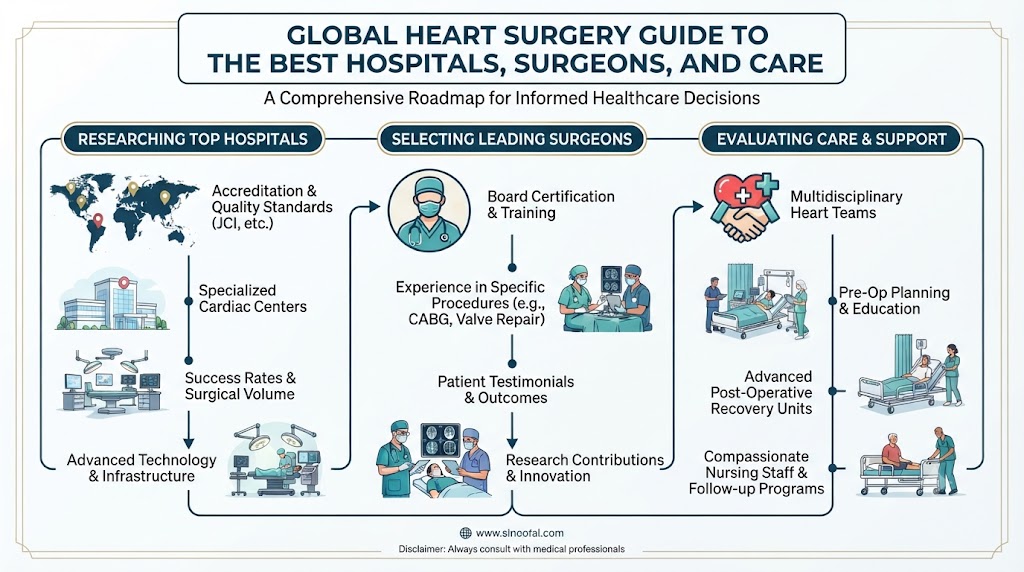
Identifying the best heart surgery hospitals involves looking beyond marketing. You should assess specific infrastructure and operational benchmarks:
- Hybrid Operating Rooms: These allow for both imaging (like fluoroscopy) and surgery to occur simultaneously, which is critical for complex vascular and valve procedures.
- Cardiac ICU (CICU): A high-acuity unit staffed by specialists trained in hemodynamics, ventilator management, and cardiac support devices (e.g., ECMO, IABP).
- Accreditation: Look for international standards like JCI (Joint Commission International) or local equivalents that mandate rigorous infection control and safety protocols.
- Diagnostic Imaging: Access to advanced cardiac MRI, CT angiography, and 3D echocardiography is foundational for accurate surgical planning.
Best Heart Surgeons in the World: An Evaluation Framework
Evaluating a cardiac surgeon should be based on transparent, objective data rather than anecdotes.
- Surgical Volume: A surgeon who performs a high volume of a specific procedure (e.g., mitral valve repair) is statistically more likely to achieve optimal results.
- Clinical Outcomes Data: Inquire about infection rates, re-operation rates, and length of stay compared to national benchmarks.
- Research & Academic Contribution: Surgeons who contribute to peer-reviewed literature are often at the forefront of the latest evidence-based techniques.
- Board Certifications: Verify that the surgeon maintains active standing with reputable cardiothoracic boards.
Best Heart Surgeons in India
India has emerged as a global hub for cardiac excellence, characterized by surgeons who undergo intense training regimes—often including fellowships in top-tier global institutions.
- Training and Pedigree: Many of the best heart surgeons in India are globally trained and have returned to lead high-volume departments.
- Specialization: Indian cardiac centers often have highly specialized units for aortic surgery, robotic procedures, and complex congenital defects.
- Patient Communication: Given the cultural emphasis on holistic care, many top Indian surgeons prioritize extensive pre-operative consultation and family engagement.
Heart Surgery in India: A Landscape Overview
Heart surgery in India has matured into a sophisticated industry. It combines high-end Western technology with a patient-centric model that emphasizes affordability and access. The integration of technology, such as robotic-assisted systems and advanced valvular replacement tools, matches standards found in North America and Europe. For further exploration of clinical resources, BestHeartSurgery.com serves as an educational bridge for patients researching these options.
Understanding Heart Surgery Cost in India
When calculating the total cost of cardiac intervention, patients must consider the entire care continuum rather than just the surgical fee.
| Component | Description | Typical Focus |
| Diagnostics | Pre-operative imaging/blood work | Essential for surgical planning |
| Surgical Fee | The primary surgeon and assistant team | Depends on surgeon experience |
| ICU & Hospital Stay | Daily room charges and nursing care | Duration determined by recovery |
| Consumables | Valves, stents, or grafts | Type of device affects cost |
| Rehab & Follow-up | Post-discharge care and medication | Critical for long-term health |
Disclaimer: Treatment costs vary depending on the patient’s condition, hospital, city, surgeon, and procedure. Always request an itemized estimate.
Bypass Surgery Cost in India
Coronary Artery Bypass Grafting (CABG) is one of the most frequently performed cardiac surgeries. The bypass surgery cost in India is significantly lower than in many Western nations, primarily due to optimized hospital operational efficiencies rather than a compromise in quality.
- Off-pump CABG: Performed without the heart-lung machine; often reduces inflammatory response and recovery time.
- Robotic CABG: A minimally invasive approach that allows for smaller incisions, though it requires specialized equipment and surgeon training.
Heart Valve Replacement Surgery Cost in India
The choice between a mechanical valve (requiring lifelong anticoagulation) and a biological valve (which may eventually need replacement) significantly influences the heart valve replacement surgery cost in India.
- TAVR/TAVI: Transcatheter Aortic Valve Replacement is increasingly available. It is a major advancement, particularly for elderly patients or those at high risk for traditional open-heart surgery.
Evaluating Hospitals for Bypass Surgery
When researching the best hospitals for bypass surgery, prioritize institutions that offer:
- Cardiac Rehabilitation Programs: Structured post-op movement and education are key to graft patency.
- Low Readmission Rates: A sign that the initial surgery and discharge planning were executed effectively.
- Experienced Anesthesia Teams: The “heart-lung” bypass management during the procedure is a critical determinant of post-operative cognitive and physical function.
Minimally Invasive Heart Surgery Centers
Minimally invasive techniques involve smaller incisions, leading to reduced trauma and faster return to normal activities. The best hospitals for minimally invasive heart surgery are characterized by:
- High investment in 3D-endoscopic surgical towers.
- Surgeons specifically credentialed in port-access techniques.
- Dedicated pathways for rapid recovery.
Best Hospitals for Pediatric Cardiac Surgery
Pediatric cardiology requires a unique skill set. The best hospitals for pediatric cardiac surgery offer:
- Pediatric-specific ICUs: Staffed with nurses and doctors trained in neonatal and infant hemodynamics.
- Family-Centered Approach: Providing support for parents, who are critical members of the child’s care team.
- Congenital Heart Specialists: Dedicated teams capable of performing complex repairs on infants with structural defects.
Medical Tourism for Cardiac Care
Medical tourism for cardiac surgery requires meticulous planning. Patients should look for hospitals with:
- International Patient Services: Departments that handle visas, travel, and on-ground logistics.
- Case Managers: A single point of contact to coordinate consultations and medical records.
- Recovery Support: Assistance in finding appropriate post-discharge accommodation and ensuring follow-up care is scheduled before the patient travels home.
Future Trends in Cardiac Surgery
The field of cardiothoracic surgery is shifting toward precision and connectivity:
- AI-Assisted Diagnosis: Algorithms that analyze EKG and imaging data to predict surgical outcomes with higher accuracy.
- 3D Surgical Planning: Surgeons can now “rehearse” a complex valve repair on a 3D-printed model of the patient’s actual heart.
- Remote Monitoring: Wearable sensors that monitor heart rhythm and fluid status post-surgery, allowing for early detection of complications.
Frequently Asked Questions
1. How do I verify a hospital’s quality?
Look for JCI or equivalent national accreditation. Review their clinical outcomes and surgical volume for your specific procedure.
2. Is surgery in India safe for international patients?
Yes, if you choose JCI-accredited hospitals that have dedicated international patient departments experienced in handling global standard protocols.
3. What does “minimally invasive” mean for my recovery?
It typically means a shorter hospital stay, less pain, a lower risk of infection, and a faster return to daily activities compared to sternotomy.
4. How does the surgery cost change based on the valve type?
Biological valves are generally more expensive due to manufacturing processes, whereas mechanical valves are cheaper but require lifelong blood-thinning medication.
5. What should I ask my surgeon during the consultation?
Ask about their personal experience with your specific condition, their complication rates, and what their post-operative care protocol looks like.
6. Do I need a referral to consult with a specialist in India?
While you can book directly, having your local cardiologist send over your medical records, diagnostic tests, and treatment history is essential for an accurate evaluation.
7. How long should I stay in the country after surgery?
Recovery time varies, but most cardiac procedures require a minimum of 2–4 weeks for monitoring before the surgeon clears you for long-haul travel.
8. Is robotic heart surgery always better?
Not necessarily. While it is excellent for specific procedures, some patients may require traditional open-heart surgery for optimal safety and access.
9. Can I bring my own medical records?
Absolutely. Digital copies of all imaging (DICOM files) and previous lab reports are vital for the surgical team’s planning.
10. How do I manage follow-up care back home?
Ensure your surgeon provides a comprehensive discharge summary, a clear medication schedule, and a plan for coordinating with your local physician.
Key Takeaways
- Evidence over Hype: Evaluate hospitals based on data, accreditation, and surgical volume.
- The Team Matters: The surgeon is the leader, but the ICU team and nursing staff are the backbone of your recovery.
- Cost Transparency: Always obtain a comprehensive, itemized estimate that includes all post-operative care components.
- Planning is Critical: When traveling for care, the logistical support provided by the hospital is as important as the surgery itself.
Conclusion
Making a decision regarding cardiac surgery is a significant undertaking that requires thorough research and honest communication with medical professionals. By focusing on institutional expertise, surgeon credentials, and a structured approach to your recovery plan, you can navigate your healthcare journey with confidence. Remember, the goal is always to prioritize safety and long-term quality of life through informed, evidence-based decision-making.