
Introduction
Tracking down the right cellular network details can often turn into a frustrating puzzle for developers, roaming teams, and industry researchers. When mobile phones switch towers across borders, they rely on specific numeric codes to stay connected properly. Knowing these background details helps experts make sense of complex wireless signals. Platforms like eSIMGlobo bring order to this data by grouping carrier records and country directories into clean pages. This practical guide covers how mobile identifiers work, why structured lookup tools matter, and what you will learn about global network systems. You will also see how code records support modern mobile applications.
Understanding MCC and MNC Codes
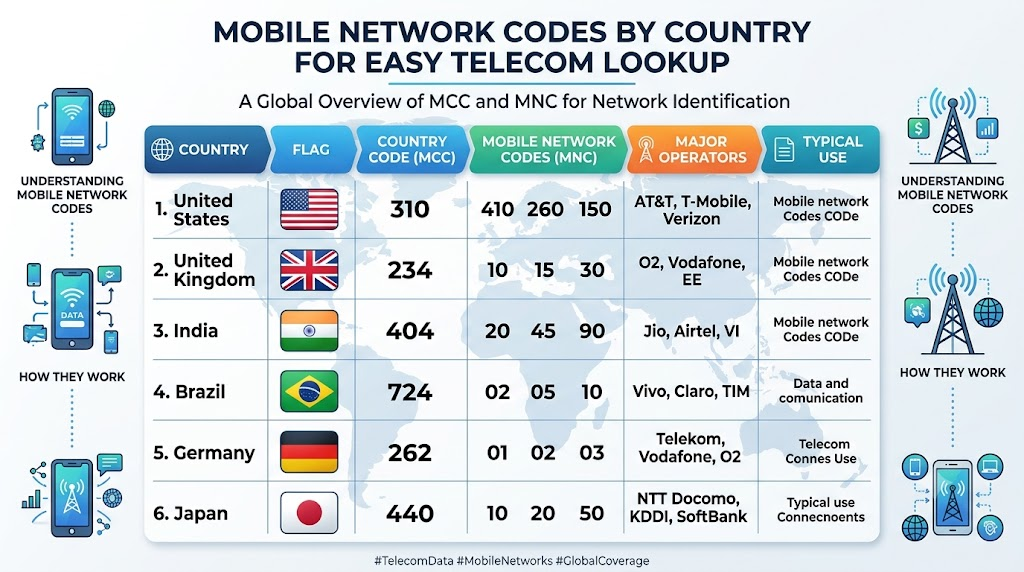
Cellular systems use standard numbers to route voice calls and data packets. The Mobile Country Code is a three-digit value that points to a specific nation. For example, Germany uses the country code 262.
Following that, the Mobile Network Code adds two or three digits to name the exact carrier. Together, these numbers form a unique pair that guides your phone to the right network. This simple system keeps global roaming smooth and predictable.
PLMN Code Lookup and Its Purpose
A Public Land Mobile Network code joins the country code and network code into one single string. Performing a PLMN Code Lookup lets engineers decode the signals broadcasted by nearby cell towers.
This check reveals which company owns a specific radio frequency. However, finding a code does not mean the network offers active service in that exact spot. Network assignments only show administrative ownership, not real-time local coverage.
Finding Mobile Network Codes by Country
Researchers often want to study carriers within one specific nation. Using a Mobile Network Codes by Country guide lets you skip massive global files.
You can filter results instantly by geographic borders. For instance, checking local assignments in Japan lets you view all registered operators in one place. This focused method saves time and keeps your research clean. A reliable Mobile Country Code List helps organize these regional records effectively.
Using a Mobile Network Operator Directory
A Mobile Network Operator Directory gathers carrier titles, assigned codes, and status updates into one list. These tools let users search for specific brands or review entire regional markets.
Software developers and network analysts use these logs to set up routing rules and test roaming setups. Having clean operator files removes guesswork when working with international cellular data.
Exploring a Global Telecom Provider Directory
Telecom markets span thousands of companies across every continent. Exploring this massive industry requires a centralized source of facts.
A Global Telecom Provider Directory lets users compare carrier details across multiple countries easily. Platforms like eSIMGlobo offer access to these cross-border network logs, helping teams explore worldwide telecom ecosystems without hassle.
Understanding a Telecom Operator Database
A quality Telecom Operator Database stores detailed logs of carrier assignments and status changes. Accurate databases rely on regular updates to match official regulatory filings.
It is vital to separate current active entries from old or retired records. Good systems clearly show if a code belongs to an active business or an inactive holding entity.
Exploring an MVNO Directory
A Mobile Virtual Network Operator provides cellular plans without owning physical radio towers or spectrum. Instead, these virtual brands lease network access from major traditional carriers.
Because they run on host infrastructure, many virtual brands do not hold their own unique network codes. An MVNO Directory helps users discover which host carrier supports a specific virtual provider.
Finding Providers Through an eSIM Provider Directory
An eSIM Provider Directory lists companies that sell digital SIM profiles for international travel and smart devices. These directories serve a different goal than standard carrier databases.
Network operators manage physical antennas, while eSIM sellers package flexible data plans for end users. Knowing this difference helps travelers pick the right service type.
Understanding an MCC MNC Lookup API
An application programming interface lets different software programs talk to each other automatically. In simple terms, an API acts as a digital courier for data requests.
Developers use an MCC MNC Lookup API to pull network records directly inside mobile apps or telecom dashboards. This automation speeds up device checks and background data lookups.
Common Uses of Mobile Network Codes
Numeric network codes support many important tasks across the telecom world. Professionals use them for security checks, routing design, and device diagnostics.
- Identifying home networks during international roaming.
- Conducting telecom market research.
- Automating data checks inside mobile applications.
- Troubleshooting device connection errors.
- Auditing carrier records for accuracy.
Remember that these codes show administrative ownership, not live signal strength or local availability.
Common Lookup Mistakes
Telecom research can lead to errors if you overlook basic details. Being careful prevents wrong assumptions.
- Mixing up country code and network code boundaries.
- Using incomplete number strings that create mixed results.
- Trusting old records without checking recent updates.
- Assuming every code owner sells direct consumer plans.
How eSIMGlobo Helps With Telecom Research
Platform features on eSIMGlobo provide structured ways to browse international carrier data. Users can check country directories to view official assignments without reading raw government files.
While these directories offer helpful guidance, they reflect administrative records rather than live coverage maps. Exploring eSIMGlobo lets you inspect telecom files efficiently while keeping technical limits in mind.
| Term | Full Form | Simple Meaning | Main Purpose |
| MCC | Mobile Country Code | A three-digit country number | Identifies the nation |
| MNC | Mobile Network Code | A two- or three-digit network number | Identifies the operator |
| PLMN | Public Land Mobile Network | Combined network string | Identifies the full network identity |
| Search Type | What It Helps Users Do |
| Country-Based Search | Filter network records by specific regions |
| PLMN Lookup | Decode combined network strings from radio signals |
| Operator Directory | Explore carrier names, codes, and operational status |
| MVNO Research | Identify virtual providers and their host networks |
| eSIM Provider Research | Compare digital travel data sellers and consumer brands |
| API-Based Lookup | Automate network data queries inside software tools |
Frequently Asked Questions
What Is an MCC MNC Lookup?
An MCC MNC lookup is the process of checking mobile numeric codes to find the country and operator behind a cellular signal. It helps engineers and developers understand network ownership quickly and accurately.
What Is the Difference Between MCC and MNC?
The MCC identifies the specific nation where a mobile network operates. The MNC identifies the individual carrier company within that country, creating a unique combination for every cellular provider worldwide.
What Does a PLMN Code Identify?
A PLMN code joins the country code and network code together into a single string. Mobile devices use this combined identifier to recognize home cellular networks and roaming partner signals abroad.
How Can I Find Mobile Network Codes by Country?
Users can browse organized country lists that group operators by geographic nation. This simple method makes it easy to research regional telecom markets without sorting through massive global datasets.
What Does a Mobile Network Operator Directory Show?
A network operator directory displays carrier brand names, assigned code pairs, and current operational statuses. It gives professionals a structured overview of active telecom companies operating in various regions.
Does Every Telecom Provider Have Its Own MCC and MNC?
Not every provider holds a unique code assignment. Smaller virtual operators often use the network codes of their host carriers instead of receiving separate regulatory numbers for themselves.
What Is the Difference Between an MNO and an MVNO?
An MNO owns physical cell towers and radio spectrum infrastructure. An MVNO leases network access from traditional carriers to offer mobile services under its own brand name to consumers.
How Is an eSIM Provider Directory Different From a Telecom Operator Database?
An eSIM directory lists companies selling digital travel data plans for devices. A telecom database records official regulatory network code assignments managed by government and industry telecommunication bodies.
What Is an MCC MNC Lookup API Used For?
An API allows software applications to request and retrieve network records automatically. Developers use it to build automated telecom tools, data verification scripts, and mobile device diagnostic features.
Why Should I Verify Network-Code Records?
Checking source records ensures that your telecom data remains current and accurate. Administrative assignments often change over time as telecommunication companies merge, rebrand, or retire old network codes.
Final Thoughts
Exploring mobile network codes gives valuable clarity for anyone working with global telecommunications. Understanding how country codes, network digits, and PLMN strings operate helps professionals interpret wireless data more effectively. Platforms like eSIMGlobo provide organized directories that make reviewing these records simple and fast. Keep in mind that code assignments show administrative ownership rather than live signal coverage. Utilizing the structured resources on eSIMGlobo is an ideal next step for your ongoing telecommunication research journey.Mobile Network Codes by Country for Easy Telecom Lookup