
Introduction
Living with constant hip pain can make every single day feel hard. Simple things like walking down the street or playing with family turn into painful chores. When hip joints wear out due to age or injury, surgery offers a clear path to relief. Many patients explore options outside their home country to receive timely care. People often travel for treatment to avoid long waiting lists or high domestic medical bills. Planning a medical trip takes careful thought and research. You must look closely at hospitals, doctors, and total costs to make the right choice.
Understanding Hip Replacement Surgery Basics
Hip replacement surgery is a common medical operation designed to fix a worn-out joint. A trained surgeon gently removes the damaged bone and cartilage inside the hip. They replace these bad parts with strong artificial components made of durable metal, ceramic, and medical-grade plastic. This new structure helps the joint move smoothly again without painful friction. Doctors often suggest this procedure when hip pain ruins your sleep and limits your daily movement. It helps many people dealing with severe arthritis or accidental hip injuries. Total hip replacement surgery involves replacing both the socket and the ball of the joint. This restores natural leg movement and brings long-term comfort.
Why Patients Choose to Travel Abroad
Many people look into hip replacement surgery abroad to find better treatment value and faster access. Local healthcare bills can be extremely expensive in many parts of the world. Public health systems also make patients wait for months or even years before getting an operating room slot. Traveling overseas lets patients receive care right when they need it. It also helps families find quality packages that match their personal budget. When you start exploring global healthcare choices, platforms like HIPHospitals can help guide you toward trusted providers, skilled doctors, and clear treatment steps.
Breaking Down Treatment Costs and Budgets
Money is a major reason why patients look beyond local borders for healthcare. The hip replacement surgery cost changes based on several important factors. No two patients have the exact same medical needs.
The final bill usually includes hospital room charges, surgeon fees, and the specific kind of artificial joint implant used. Routine nursing care, pre-surgery blood tests, and medical imaging scans also add to the overall expense.
| Cost Factor | What It Means | Why It Matters |
| Hospital | Where treatment takes place | Affects facility standards and room rates |
| Surgeon | Doctor performing the operation | Experience level influences fee structures |
| Implant | Artificial joint material | Quality and brand options vary in price |
| Stay Time | Days spent in the hospital room | Longer recovery stays increase total bills |
Comparing Prices Across Different Nations
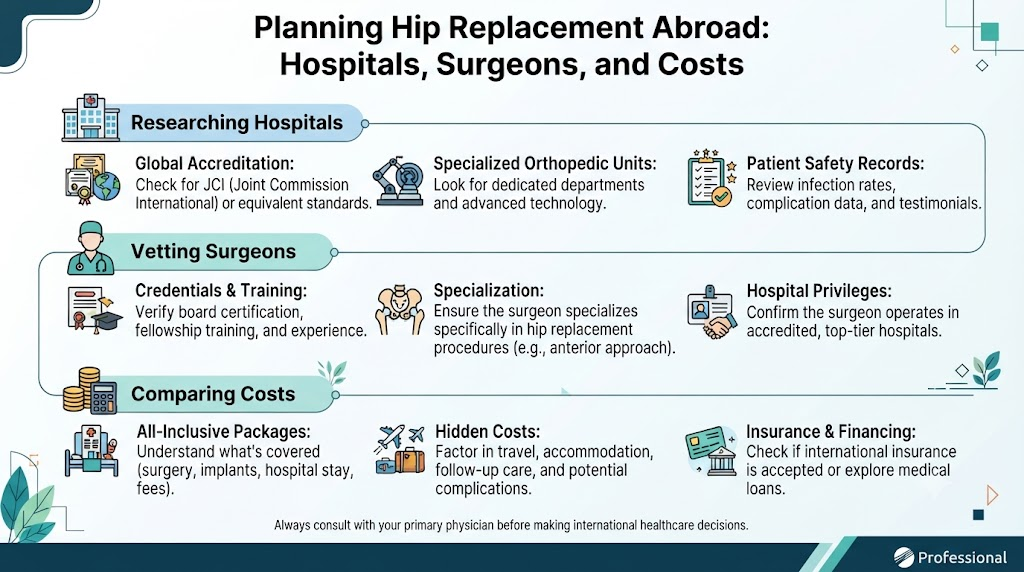
The hip replacement cost by country varies widely around the globe. Some nations offer advanced medical care and modern technology at a fraction of Western prices. When you compare foreign countries, look at more than just the base hospital quote. Travel tickets, hotel stays, and local ground transport add to your total trip budget. Always ask your chosen medical provider for a complete written estimate before you book anything.
Finding the Right Country for Your Care
Choosing where to travel for medical treatment is a major personal choice. The best country for hip replacement surgery depends heavily on what matters most to you and your family.
- Look for nations known for strict international medical safety standards.
- Check if the doctors and support staff speak your native language fluently.
- Make sure the country has major airports with easy flight connections.
- Review local safety conditions, climate, and tourist guidelines.
- Confirm that post-surgery physical therapy is easy to access locally.
Choosing Top Orthopedic Hospitals
Finding the best hospitals for hip replacement requires checking a few vital details. You want a medical center that prioritizes patient cleanliness, safety, and comfort. Look for sterile operating theaters equipped with modern air systems and strong emergency backup units. A quality hospital should feature a dedicated orthopedic department. They should also provide transparent treatment plans and helpful support staff for international visitors.
Selecting Experienced Surgeons
The skill and background of your doctor play a huge role in your healing success. Experienced hip replacement surgeons know how to manage complex joints and prevent potential issues. You should verify how many years the specialist has performed this exact operation. Ask about their professional training and hospital affiliations. Good two-way communication with your doctor helps you feel calm and confident before surgery day.
Exploring Medical Tourism Options
Medical tourism for hip replacement is becoming very popular across the world. It opens doors to high-standard care in peaceful recovery environments. The journey involves a few clear steps. First, you gather your medical files, such as X-rays and doctor notes, and share them securely with the overseas clinic. Once the medical team reviews your health records, they send back a detailed treatment plan and cost quote. Then you can arrange your travel dates and lodging.
Partnering with a Medical Tourism Company
Many patients choose to work with a medical tourism company to simplify their travel plans. These agencies help coordinate hospital appointments, flights, and nearby hotels.
- They help translate your medical charts into local languages.
- They arrange airport pickups and comfortable local rides.
- They give clear, itemized price estimates before departure.
- They connect you with certified hospitals and reputable doctors.
- They offer ongoing customer support throughout your stay abroad.
Always verify that the agency is honest and transparent about their service fees. Make sure you understand all payment terms before transferring any money.
Preparing for Your Journey and Surgery
Proper preparation makes your medical trip much smoother and safer. Schedule a thorough checkup with your local doctor before booking flights. Ensure your heart and lungs are strong enough for air travel. Pack loose, comfortable clothing that is easy to put on without bending too much after surgery. Bring all essential medical files, past test results, and a list of current medicines. Plan to stay in your destination city for at least two to three weeks after the operation for initial follow-up exams.
Healing and Physical Rehabilitation
Recovery requires patience, rest, and active effort from the patient. Shortly after the operation, hospital nurses and physical therapists will help you get out of bed. You will practice gentle movements to get your new leg working. Physioterapy is a crucial part of the healing journey. It helps rebuild muscle strength and teaches you how to walk without pain. Always stick closely to your doctor’s instructions regarding physical limits during the first few months.
Frequently Asked Questions
How long does a hip replacement surgery take?
Most standard operations take about one to two hours. You will spend extra time in the recovery ward waking up before moving to your regular room.
When can I walk after the operation?
Most patients take their first assisted steps using a walker or cane within twenty-four hours after the procedure.
How long do I need to stay in the hospital?
Most people stay in the hospital for three to five days depending on how quickly their body begins to heal.
When is it safe to board a flight home?
Doctors usually advise waiting two to three weeks after surgery before taking a long flight to reduce blood clot risks.
Will I feel pain after the surgery?
You will experience some post-surgical soreness, but medical teams provide proper medicines to keep you comfortable.
What activities should I avoid after surgery?
Avoid heavy lifting, high-impact running, and deep bending for the first few months to protect the healing joint.
How do I share my medical reports with overseas hospitals?
You can send digital copies of your diagnostic scans and doctor notes securely through email or hospital web portals.
Do I need a travel companion for my medical trip?
Yes, having a trusted family member or close friend travel with you provides wonderful physical and emotional support.
How long do artificial hip joints last?
Most modern artificial hip implants last anywhere from fifteen to twenty years, and often longer with careful daily habits.
What are the main risks of hip replacement surgery?
Potential risks include wound infection, blood clots, and joint stiffness, though surgical teams take strict steps to prevent them.
Final Thought
Deciding to pursue a hip replacement is a major step toward reclaiming an active, pain-free lifestyle. Taking time to research global hospital standards, surgeon qualifications, and financial details empowers you to make a confident choice. By comparing various destinations thoughtfully, you can discover affordable hip replacement surgery options that match your exact health needs. Proper preparation, combined with reliable guidance from healthcare networks like HIPHospitals, ensures your medical journey remains safe, smooth, and successful from start to finish.